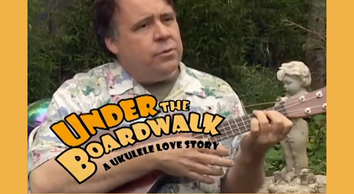

An interview with George...
Just how multiple Grammy winner George Kahumoku has run a successful music career and a farm seems a bit of a mystery, until he describes his daily routine and great ʻohana. Oh, and somewhere in there he’s managed to earn three master’s degrees — one in sculpture, another in business administration, and a third in fine arts.
For more than 50 years, Kahumoku has not only contributed to a growing interest and respect for Hawaiian music, especially in the revival of kī hōʻalu, slack key guitar. He’s also helped in institutional building by founding the Institute of Hawaiian Music at the University of Hawaiʻi-Maui College. The Institute helps to train the next wave of songwriters in Hawaiʻi.
This year, Kahumoku is among a handful of musical artist to receive the Hawaiʻi Academy of Recording Artists’ 2022 Lifetime Achievement Award.
In this interview, Kahumoku describes a Hawaiian culture that nurtured his life as a musician, his artistic routine, and the “accident” that made winning Grammys possible. Maui Now writer Gary Kubota interviews him.
KUBOTA: Congratulations on being recognized by the Hawaiian Academy of Recording Arts for your “Lifetime of Achievement.” I have to tell you I’m fascinated by your many talents — singing and playing the guitar, writing songs and short stories, sketching illustrations — and farming? How did you learn how to farm?
KAHUMOKU: My Great-grandpa Willy Kahumoku and his eldest son, Uncle Pila Kahumoku, taught me on their farm in Kealia in South Kona in the 1950s. I grew watercress and taro at age three and raised my first animal, a horse named “Jimmy Boy,” at age five. Horses were a natural part of our lives. We would go Christmas caroling from house to house in our village on horseback. There were only two cars in the village. The cars served as taxis, and we used the taxis to go shopping 19 miles away in Kainaliu, or to the Kona Airport 50 miles away.
KUBOTA: Were the plants and your horse part of your daily responsibility?
KAHUMOKU: Yes, we were all given responsibilities as children. When I was three years old, my great-grandfather put four 1-foot sticks on the ground, forming a square foot, and told me that was my kuleana, my responsibility. The sticks were placed under our leaky red wood water tank. I planted the square with dryland watercress. By the time I was five years old, I had the whole sides of the 16-foot redwood water tank planted in unchoy and dryland water cress.
By the time I was 15, my responsibility expanded. I was taking care of a quarter acre of taro, bananas, wild yam, tapioca, sweet potato, coffee and breadfruit. When I was 30, I was farming almost 40 acres of mostly taro, Chinese ginger, bananas, awa, and cucumbers, and raising pigs and cattle. At 36, I was in charge of farming and ranching a thousand of acres in Kona, had 19 families working for me, and helped to run a slaughterhouse on the Big Island. I did all the above one square foot at a time — a method taught to me by great grandpa Willy Kahumoku when I was just three years old.
KUBOTA: That sounds more than a full-time job? Where did you find time to play and sing?
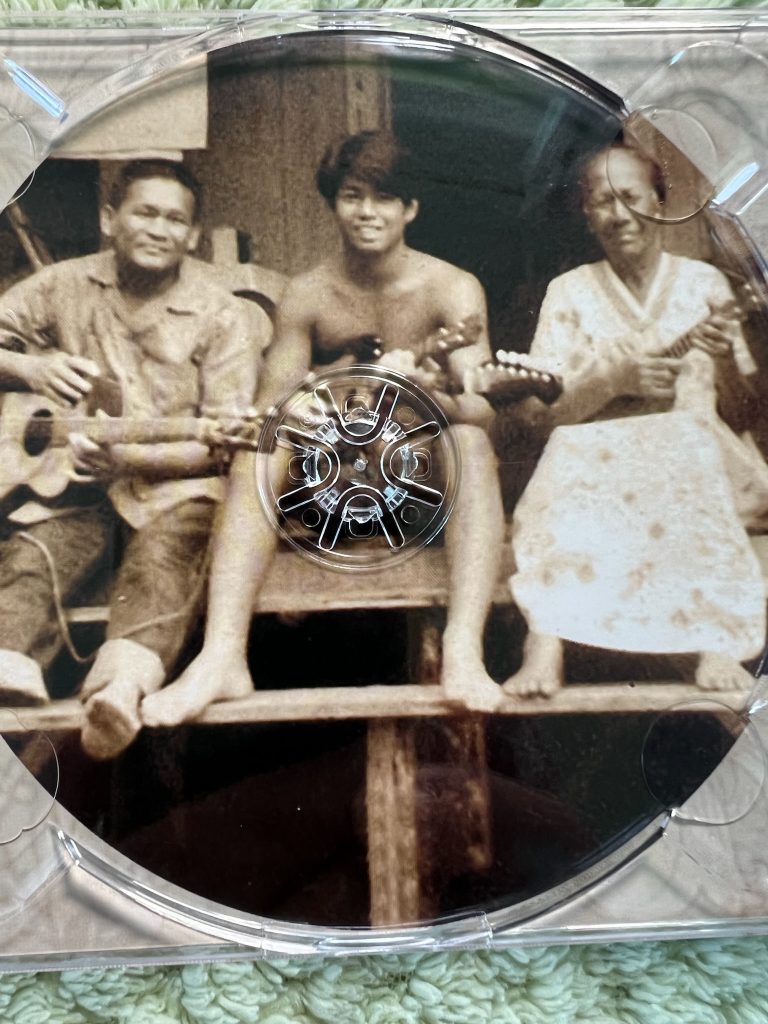
KAHUMOKU: I grew up in a musical family with 26 cousins. We all sang Hawaiian hymns at churches. Everyone played music. We played music six to seven days a week. Great-grandpa Willy was a Native Hawaiian practitioner and Kahu, a priest, for a Jesus Christ of Latter-day Saints. He raised pigs, which was the mainstay for rights-of-passage events such as births, the first-year baby lūʻau, weddings, house warmings, canoe launchings and deaths. So, there was usually something happening — a party to prepare, the party itself, and the after-party event. Our ʻohana shared and played music at all these events. Later when Great-grandpa Willy died, his wife Tutu Ko’o Ko’o Ha’ae Kahumoku, who was a member of United Church of Christ in Kealia, Kona and a Kahu herself, met Filipino cowboy Grandpa Tommy Martinez who continued with the music events.

KUBOTA: How did you learn how to play the guitar in the slack-key Hawaiian style?
KAHUMOKU: Great-grandpa Willy was my main mentor and my dad, George Sr. An older cousin who grew up with Tutu Ko’ko’o and Great-grandpa Willy, Edward Michael Naihe, was my main inspiration. Out of the 26 cousins, cousin Michael was the best. My brother Moses was second best. I was maybe the 11th best player.
Gary Kubota - Article written in Dec. 2022 -
Gary Kubota, an associate writer with MauiNow.com, has worked as a staff news writer with the Honolulu Star-Advertiser and The Maui News. He lives on Maui. He’s also been an editor/business manager with the Lahaina News. He’s received national and regional journalism awards — a National Press Club Citation of Merit and Walter Cronkite Best In The West, among them.