
George's Excellent Adventures
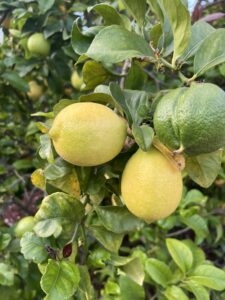
George and his Lemon Tree
When I was young, my cousin from South Kona learned and sang the song Lemon Tree, sung by Peter, Paul, and Mary in the early 1960s.
When I got older and lived in South Kona Kealia on Hawaii Island, we had a huge lemon tree. My Tutu (grandmother) Ko’oko’o would pick and put the lemons in recycled Best Foods gallon jars & salt each gallon of lemons with a cup of Hawaiian salt that we harvested from the ocean down at the beach in South Kona Kealia.
Then we would cover the jars with wax paper or recycled plastic poi bags to keep the salt from rusting out the covers of the gallon jars.
We would let those gallon jars of lemons age for at least one to two years on the top of the tin roof of our water tank in the hot sun. After a time, the lemons in the gallon jars would turn brown, and a salty syrup would accumulate in the jar. At that point, the jars would be opened, and the aged lemons would be cut into 1/2 pieces and mixed in a huge bowl or Kelamania with about 6 cups of honey from our beehives and 6 cups of raw brown sugar from the sugar plantation in Ka’u.
We would add 3 lbs of dried prunes & 3 pounds of apricots & 3 pounds of wet Ling hee mui Chinese plums and about 16 ounces of dried ling hee mui powder from Aunty Hanami’s Fujihara Store from across the street.
We would also add about 3 pounds of dried, salted, sliced, homemade mango that we picked on the side of the road that we dried. We would put this mixture back into 3-gallon jars, and it aged in the jars in the shade for another year or so.
When it was aged, we finally ate it as a condiment like mango chutney or just plain or made into a BBQ sauce. We would add: shoyu, garlic, ginger, green onions & guava jam or jelly. We'd use it on chicken, Kal-B ribs, sliced pork or beef, deer meat, or sliced donkey meat. This ling hee mui sauce could also be added to cubed pineapple and eaten with toothpicks! It was delicious!